
Your car depends on its battery every time you turn the key or press the start button, yet many drivers rarely think about what makes that power possible.
Car battery voltage plays a quiet but important role in starting the engine, running lights, and keeping electronics working smoothly.
When voltage stays within a healthy range, your car feels dependable and ready to go.
When it does not, small issues can quickly turn into frustrating problems.
Learning how battery voltage works does not require technical knowledge or special tools.
With a basic understanding, you can spot early warning signs, make smarter maintenance choices, and avoid unexpected breakdowns.
This blog breaks down what car battery voltage is, including normal and new battery voltage levels.
What is Car Battery Voltage?
Car battery voltage is the electrical pressure that pushes power from the battery to your car’s systems, allowing the engine to start and electronics to work.
Inside the battery, stored chemical energy turns into electrical energy through a reaction between lead plates and an electrolyte solution.
This reaction creates a steady flow of voltage that your car can use.
When the battery sends the right voltage, the starter motor turns smoothly, the lights stay bright, and the onboard systems run without issues.
Keeping voltage within a normal range helps your car run reliably every day.
Normal Battery Voltage Levels for Car Batteries
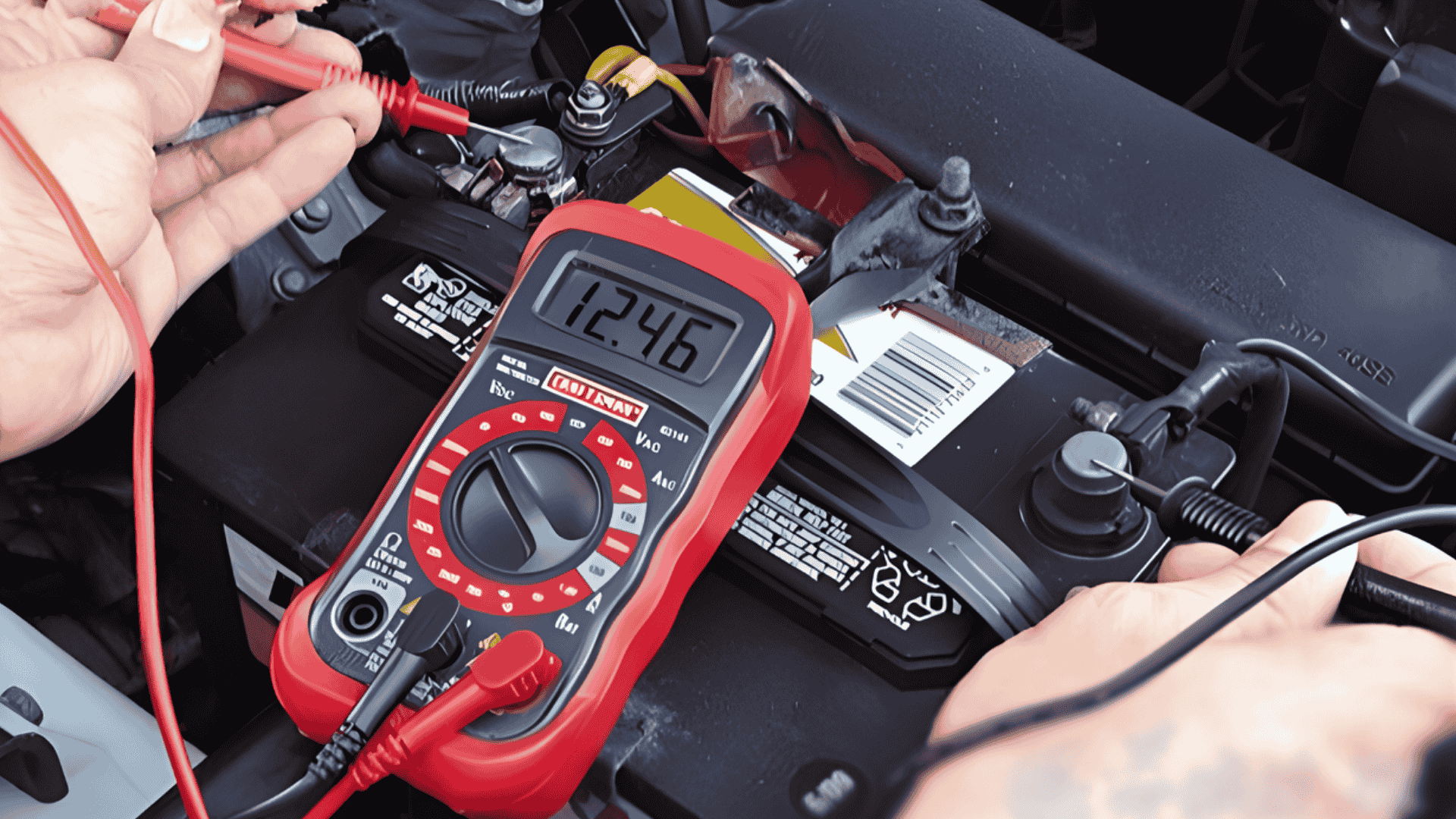
A healthy car battery usually reads around 12.6 volts when fully charged, and the engine is off. While running, the voltage increases as the charging system supplies power.
1. When the Car Is Off
When the car is turned off, the battery’s resting voltage shows its charge level and overall health.
A fully charged battery should read close to 12.6 volts. Readings between 12.4 and 12.6 volts still indicate good condition, though slightly lower charge.
If the voltage drops to 12.2 volts or less, the battery may be weak or partly drained.
Consistently low resting voltage often points to an aging battery or one that no longer holds a full charge.
2. When the Car Is Running
When the engine is running, the alternator takes over and raises battery voltage to keep the battery charged and power the car’s systems.
Normal running car battery voltage usually falls between 13.7 and 14.7 volts.
This higher range shows the alternator is working properly and supplying enough electrical power.
If the voltage stays below this range, the battery may not charge fully. If it rises too high, the charging system could strain electronics and reduce battery life.
New Car Battery Voltage Levels
New car battery voltage levels are usually higher than those of an older battery because the battery is fully charged and in peak condition.
A new or fully charged car battery typically reads around 12.6 to 12.8 volts when the engine is off, which shows it has maximum energy.
Right after installation, it is normal for the voltage to sit slightly above this range.
This happens because of a surface charge, which is a temporary boost in voltage left over from the charging process at the factory.
Surface charge does not reflect long-term voltage and usually settles down after the battery sits unused for a few hours or after a short drive.
Once the surface charge fades, the battery voltage will stabilize at its true resting level and perform as expected.
How to Check Car Battery Voltage?
This section gives an overview of how the voltage is checked using basic tools. It helps you understand your battery is healthy without technical steps.
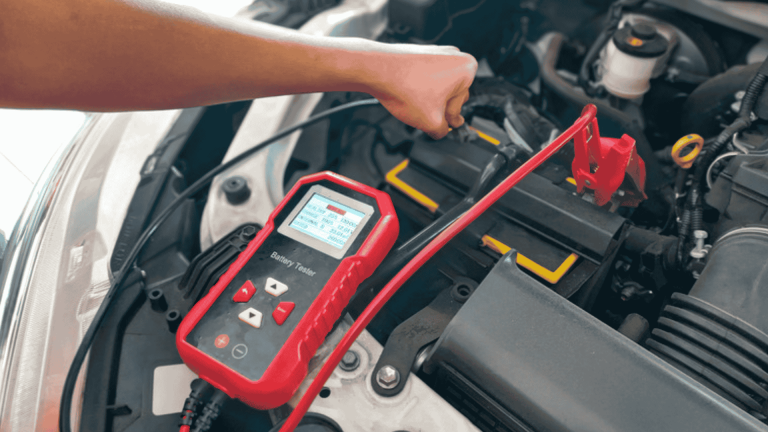
- Using a Multimeter: Switch off the car, set the multimeter to DC volts, connect the red lead to the positive terminal, and the black lead to the negative terminal.
- Check With Engine Off: Take a voltage reading with the engine off to check the battery’s resting voltage and charge condition.
- Check With Engine Running: Measure voltage while the engine is running to confirm the alternator is charging the battery.
- Dashboard Warning Signs: Perform a voltage test if you notice warning lights, dim headlights, or slow engine starts.
- Auto Shop Testing: Go to an auto parts store or mechanic for a free or professional battery and voltage test.
Car Battery Voltage Chart At a Glance
This table summarizes 12V lead-acid car battery voltage ranges. Readings are for a battery at rest and with the engine running, expect 13.7–14.7V.
| Voltage Range | Status | What It Means | Action Needed |
|---|---|---|---|
| 12.6–12.8V | Healthy | Fully charged | None—battery is optimal |
| 12.4–12.5V | Good | 75–90% charged | Monitor; top off if needed |
| 12.2–12.3V | Weak | May struggle in cold | Charge immediately |
| 12.0–12.1V | Low | Have issues likely | Charge or test the alternator |
| Below 12.0V | Failing | Sulfation damage | Replace battery |
Low Car Battery Voltage Explained
Low car battery voltage means the battery does not have enough electrical pressure to power the engine and vehicle systems properly.
This usually happens as the battery ages and loses its ability to hold a full charge.
Cold weather can also lower voltage by slowing chemical reactions inside the battery.
Electrical drain from lights, accessories, or onboard systems left running can reduce voltage over time.
Whenthe voltage drops, the first sign is often a slow or weak engine start.
In some cases, the battery or charging warning light may appear on the dashboard. Ignoring low voltage can shorten the battery’s remaining life.
High Car Battery Voltage: Is It a Problem?
High voltage is not always a problem, but it depends on when it happens and how high the reading is.
While the engine is running, a higher voltage is normal because the alternator is charging the battery and powering vehicle systems.
Safe charging voltage usually stays between about 13.7 and 14.7 volts.
Problems start when the voltage stays too high for too long. Overcharging often points to a faulty alternator or voltage regulator.
Excess voltage can damage sensitive electronics, cause warning lights, and shorten battery life by overheating it.
In severe cases, it may lead to battery swelling or failure. Monitoring voltage helps catch charging system issues early.
When to Replace a Car Battery Based on Voltage?
Car battery voltage readings can help determine when a car battery is nearing the end of its useful life.
If readings stay around 12.2 volts or lower, even after charging, the battery may no longer hold enough power.
As batteries age, internal wear reduces their ability to store and release energy, making voltage less stable.
Older batteries may show normal voltage at rest but fail under load.
Most car batteries last 3 to 5 years, and low or inconsistent voltage during that time often signals replacement is needed to avoid unexpected starting problems.
Tips to Maintain Proper Car Battery Voltage
These tips help keep your car battery steady and reliable over time. Simple habits and basic care can reduce strain on the battery.
- Drive Regularly: Taking longer, regular drives helps the alternator fully recharge the battery.
- Turn Off Accessories: Always switch off lights, radio, and charging devices to prevent slow battery drain when the car is off.
- Keep Terminals Clean: Clean battery terminals allow proper electrical flow and help maintain consistent voltage without resistance issues.
- Check Battery Age: As batteries get older, they lose charge faster and require more frequent monitoring to avoid voltage problems.
- Test Voltage Periodically: Regular voltage testing helps detect early battery issues before they cause starting or electrical failures.
Conclusion
Understanding car battery voltage and the normal voltage range helps you stay in control of your vehicle’s reliability and avoid stressful surprises on the road.
Simple checks can reveal whether your battery is healthy, aging, or close to failure.
Most breakdowns linked to battery issues give warning signs long before they happen, and voltage is one of the clearest signals.
Make battery voltage checks part of your routine care, especially before long drives or seasonal changes.
Have a tip for maintaining battery health? Share it in the comments below.
If something feels off, test it or have it checked. Take action today to keep your car dependable and ready when you need it most.
Frequently Asked Questions
How Many Volts is a Car Battery When Fully Charged?
A fully charged car battery usually reads about 12.6 to 12.8 volts when the engine is off, showing it has maximum stored electrical energy.
Is 11.8 Volts a Dead Battery?
An 11.8-volt reading means the battery is very low and likely weak, though it may still start the car; it needs charging or replacement soon.
Can a Weak Battery Damage the Alternator?
Yes, a weak battery can damage the alternator over time. When the battery cannot hold a proper charge, the alternator has to work harder and run longer to supply power.