
Check Engine Light On Before Emissions? Don’t Panic (But Also Don’t Ignore It)
If you’re staring at that little orange check engine light like it’s personally judging you (it is), and your emissions test is coming up… take a breath.
Yes, in most states a check engine light is basically an automatic “nope” from the inspection station. But the fix is often way cheaper (and way dumber) than people expect. Like: a gas cap. I wish I were kidding.
Let me walk you through what they actually check, why people fail even when the light is off (rude), and what I’d do if I were you with a deadline and a mild sense of doom.
What the emissions test is really doing now (aka: your car is tattling)
For most vehicles 1996 and newer, emissions testing isn’t some guy sniffing your tailpipe like a bloodhound. It’s mostly your car’s computer getting interrogated.
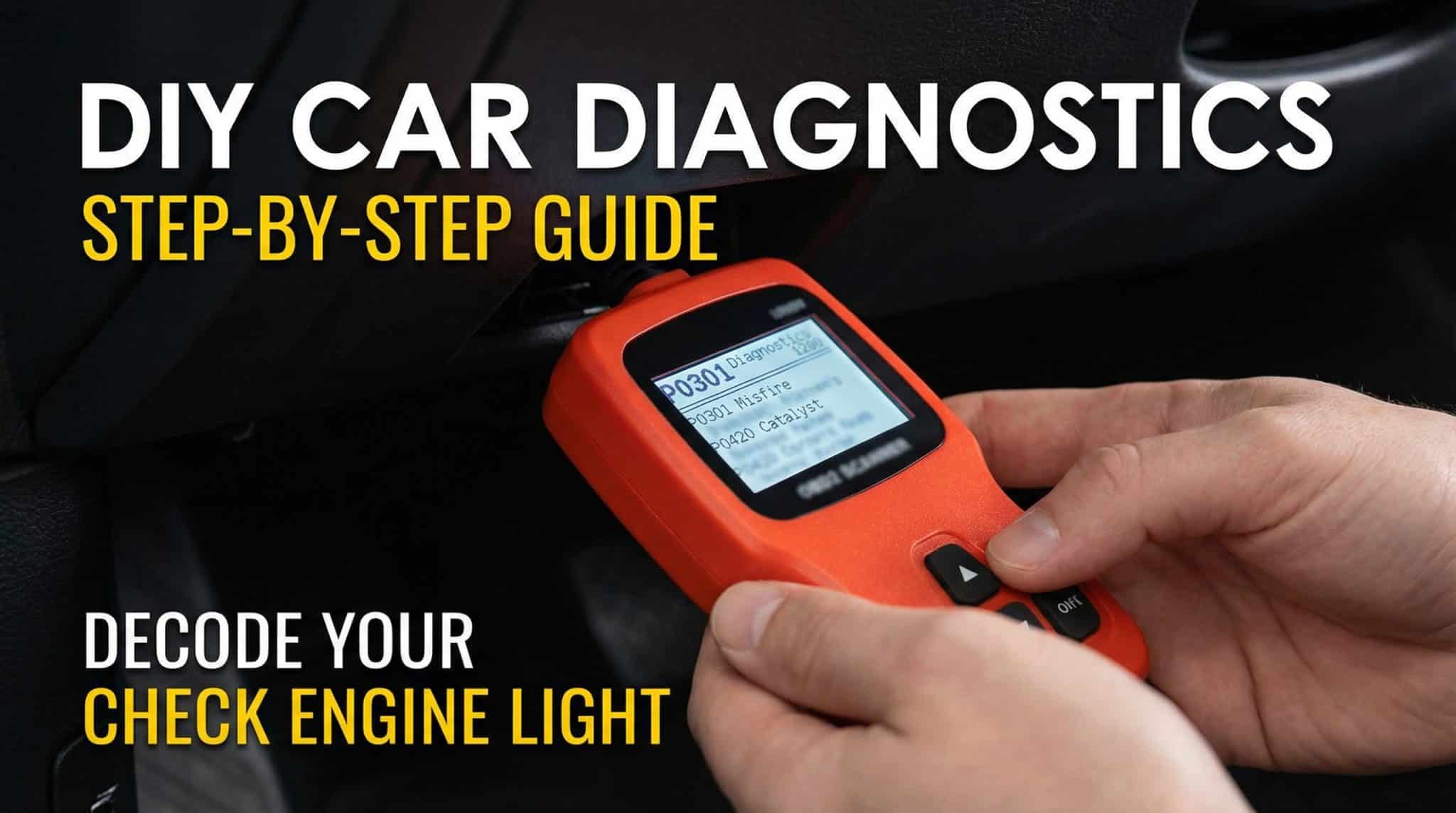
They plug into your OBD-II port (that little connector under the dash) and look for three things:
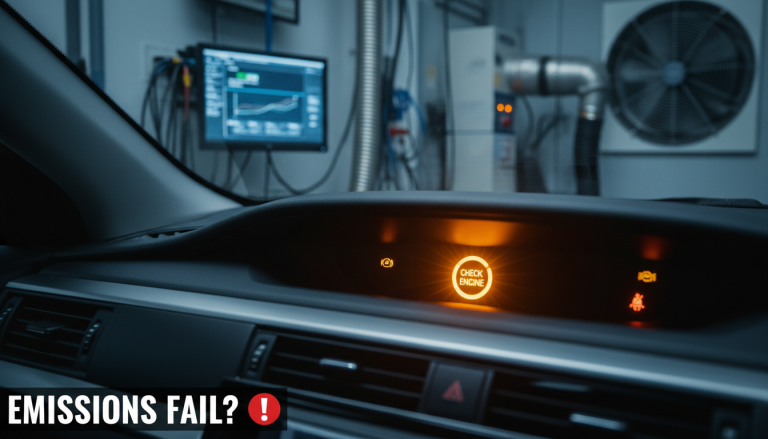
- Is the check engine light on? (It’s also called the MIL Malfunction Indicator Lamp because cars love drama.)
- Are there trouble codes stored? (DTCs like P0301, etc.)
- Are your readiness monitors “Ready”?
These are self-tests your car runs while you drive to prove the emissions systems are behaving.
If any of that sounds like nonsense, don’t worry. You don’t need to become a mechanic. You just need to know how not to accidentally sabotage yourself.
Why the check engine light is basically an instant fail
That light exists largely as the MIL dashboard warning lamp to yell about emissions related issues. So if it’s on, the inspection station sees it as your car raising its hand and going, “Hi, yes, I’m the problem.”
Even if the car feels totally fine. Even if it’s running like a champ. The light = fail (in most places).
Solid vs. flashing (this matters)
- Solid check engine light: Usually “get this checked soon.” You can typically drive to a shop without your engine immediately exploding.
- Flashing check engine light: This is the car screaming. Often a serious misfire that can damage the catalytic converter fast. Pull over, stop driving, get it checked.
(Flashing means “expensive noises are coming,” basically.)
“But my dash has other lights on…”
ABS, tire pressure, airbag, battery, oil, brake lights those are separate systems. Your dash can look like a tiny Christmas tree and you can still pass the OBD portion as long as the check engine light is off.
The sneaky fail: when your check engine light is OFF… and you still fail
This is the one that makes people want to flip a folding chair in the parking lot.
If you (or a shop) checked and cleared DTCs, disconnected the battery, or reset the computer right before the test, your car’s readiness monitors often go to “Not Ready.”
Translation: your car hasn’t had time to re-run its self-tests yet.
Inspection stations see that instantly, and many states allow only one or two “Not Ready” monitors (often depending on model year and location). Show up with a bunch of incomplete monitors and they’ll send you home like, “Nice try.”
So no, clearing codes right before emissions is not a hack. It’s more like… deleting your homework and then being shocked you still fail the class.
My “don’t waste your own time” pre-test checklist
Here’s what I’d do, in this order:
1) Check for codes and readiness before you book the test
You can:
- Buy a basic OBD-II scanner (usually $25-$60 and worth it if you drive an older car), or
- Go to an auto parts store many will read codes for free
What you want to know:
- Are there active codes?
- Is the check engine light commanded on?
- Are your monitors Ready?
2) Don’t roll in with an empty tank
EVAP related tests can be picky. Keeping your fuel level above a quarter tank is a good general rule.
3) Day of the test: warm it up like you mean it
Drive 20-30 minutes with a mix of city + highway before you pull in. It helps get the catalytic converter up to temp and can finish monitors that are close.
4) Quick bulb check (yes, this is a thing)
Turn the key to “On” (without starting) and make sure the check engine light comes on briefly with the other dash lights. In many states, a burned out bulb is a fail because it looks like you’re trying to hide something.
The usual suspects (aka: what triggers that light most often)
I’m not saying your car is definitely being dramatic over something small… but it often is.
1) The gas cap (the $20 villain)
Loose, cracked seal, missing EVAP codes love that stuff.
What to do:
- Tighten it until it clicks (I do three clicks because I’m superstitious)
- If the seal looks cracked/dry, replace the cap (usually under $20)
- Then drive normally for a few days
You’d be amazed how many “serious” problems are solved by… twisting a cap like an adult.
2) Spark plugs / ignition misfires
If you’ve got rough idle, hesitation, or misfire codes, spark plugs are often the starting point. Many cars are DIY friendly here, though some are… not. (I once helped a friend with a vehicle where changing plugs felt like solving an escape room.)
If plugs don’t fix it, the next suspects are often ignition coils.
3) Mass airflow sensor (MAF) getting cranky
Symptoms can be hesitation, stalling, weird idling.
Before you buy a pricey sensor, try cleaning it with actual MAF sensor cleaner (not random spray from under your sink, please). It’s usually a cheap attempt worth making.
4) Oxygen sensors (common, not always obvious)
Sometimes you feel it (bad mileage, rough running). Sometimes you feel nothing at all and the code is like, “Surprise!”
Ignoring O2 sensor issues can lead to catalytic converter problems, which is basically letting a small leak turn into a ceiling collapse.
5) Catalytic converter codes (P0420/P0430) don’t panic buy a converter
These codes often make people assume they need a new catalytic converter immediately (aka: a wallet funeral).
Before going there, rule out upstream issues like:
- Misfires
- Vacuum leaks
- Exhaust leaks near the manifold
- Bad O2 sensors
Converters are expensive, so I’m a big fan of confirming the basics before you commit to a four digit repair.
After repairs: how to get your car “Ready” again (without losing your mind)
Once the actual problem is fixed, your car still needs time to run its self-tests again. There’s no magic button for this (I know, I want one too).
My general rule:
- Drive 50-100 miles over a few days
- Mix it up: cold starts, city driving, highway driving, idling, different speeds
- Then re-check monitors with your scanner and confirm they say Ready
A long highway drive alone doesn’t always do it. Your car wants variety. Like a toddler. Or my appetite.
If you already failed, here’s your next move
First: don’t spiral. A failed test usually comes with a report that tells you exactly why you failed codes and monitor status included.
Then:
- Ask about retest rules before you leave (many states allow a free retest within a certain window if you return to the same station often 30-60 days)
- Keep repair receipts, especially if your state offers waivers or assistance programs
About waivers/exemptions
Some states have repair cost waivers if you’ve spent over a certain amount trying to fix it (often a few hundred dollars). Requirements vary a lot, and they usually want receipts from licensed shops.
Also: some places exempt older vehicles, certain diesels, motorcycles, EVs, or entire counties don’t even test. So yes your neighbor might be living emissions test free while you’re over here sweating. Check your local DMV site for your exact rules.
The bottom line
If your check engine light is on, you probably can’t pass emissions so the goal is to figure out why it’s on, fix the real issue (not just clear the code), and give your car enough driving time to flip those monitors to Ready.
Start with the easy stuff (hello, gas cap), don’t show up with “Not Ready” everywhere, and warm the car up before you test.
And if all else fails: get the codes read, make a plan, and remember this is annoying, not impossible. Your dashboard doesn’t get to win.