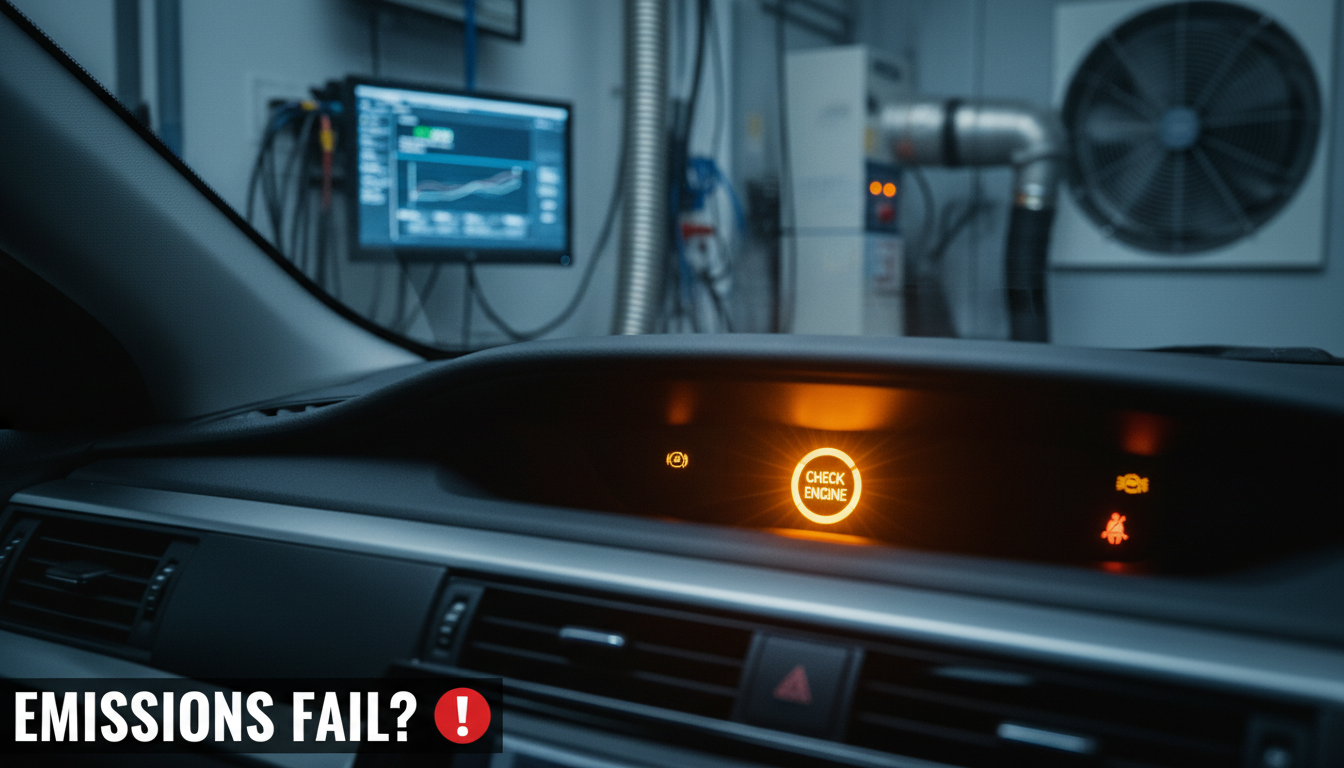

Check Engine Light On? What It Actually Costs (and When to Panic)
If your check engine light just popped on and your brain immediately went to “Cool, I guess I live at the mechanic now,” take a breath.
Most check engine light situations are not financial doom. Roughly 90% of repairs land under $500, and a small but real chunk cost nothing at all (hi, loose gas cap). The national average floats around $415, but a lot of people end up in that $150-$400 zone.
The trick is figuring out how urgent your light is before you start mentally selling your sofa on Facebook Marketplace.
Step 1: Is It Steady… or Flashing Like a Tiny Panic Strobe?
This is the part that actually matters right now.
If it’s steady
Usually it’s an emissions related issue. Annoying? Yes. “Your engine will implode in the next five minutes”? Usually no. You typically have a week or two to schedule a diagnosis without clutching your pearls the whole time.
If it’s flashing
Pull over safely. Turn the car off. Call for a tow.
A flashing check engine light often means an engine misfire, and driving like that can torch your catalytic converter fast. This is the automotive version of “stop scrolling and go to urgent care.”
My very unfun opinion: if it’s flashing and you keep driving anyway, you’re basically feeding dollar bills into the exhaust pipe.
Before You Do Anything Fancy: Check the Gas Cap (Seriously)
If the light came on right after you got gas, do this little ritual:
- Turn the car off
- Take off the gas cap
- Put it back on and tighten it until you get a few good clicks (I usually aim for three)
- Drive normally for a handful of short trips
EVAP codes from a cap that wasn’t sealed can clear on their own after a bit. And yes, it feels absurd that a $0 fix can trigger a dashboard light designed to spike your blood pressure, but welcome to modern vehicles.
If tightening the cap doesn’t do it, don’t spiral. Just move to the next step.
What Diagnosis Should Cost (and Why Free Code Scans Aren’t the Whole Story)
You can get a free code scan at places like AutoZone. That’s helpful for getting a general idea of what system is mad.
But diagnostic code explanations are not the same thing as a diagnosis.
Example: code P0420 (catalytic converter efficiency). That could mean:
- the converter is actually failing
- an oxygen sensor is lying
- an exhaust leak is skewing readings
- the engine is running rich because of something else entirely
Same code. Totally different fixes. Totally different bills.
Typical diagnostic pricing (for real troubleshooting)
- Independent shop: about $90-$180
- Dealership: about $122-$250
For that, you’re paying for someone to do more than plug in a scanner and shrug. Often you’ll get live data, visual checks, maybe a test drive, and a written estimate. Some shops will apply the diagnostic fee toward the repair if you have them do the work (ask).
The money pit to avoid: approving a repair based only on a free scan and a guess. “Parts swapping” can turn into paying twice once for the wrong part, again for the right fix.
The Repairs You’ll Most Likely Need (a.k.a. The “Please Don’t Be the Converter” List)
The catalytic converter is the headline grabber because it’s expensive (average around $1,348), but most check engine light fixes are smaller parts and sensors.
Here are some very common ones, with typical averages:
- Oxygen sensor: ~$254
- Ignition coil + spark plugs: ~$400
- Mass air flow (MAF) sensor: ~$323
- EVAP purge valve: ~$144
- Thermostat: ~$254
- Gas cap: ~$0-$28 (the drama queen of car parts)
And here’s the part people hate hearing: ignoring small stuff can create big stuff. An oxygen sensor that’s been complaining for months can contribute to catalytic converter failure. So that $254 “later” can become a $1,600 “why me” situation.
I’m not saying you have to sprint to a shop the second the light comes on steady but don’t turn it into a long term roommate either.
When It Does Get Expensive (and What to Check Before You Pay)
Big bills happen, just not as often as your anxious brain says they do. If you get a scary estimate, run through these quick checks:
- Catalytic converter: ask about the federal emissions warranty. Many vehicles have converter coverage for 8 years / 80,000 miles (even if you’re not the original owner).
- Hybrid battery (~$3,000): often has an 8-10 year warranty depending on the car/state.
- Transmission issues (~$3,800): usually comes with symptoms beyond “a light is on” (shifting weird, slipping, etc.).
- Hybrid inverter assembly (~$4,100): mostly a high mileage hybrid problem.
If someone says you need a catalytic converter, ask this exact question:
“What caused it to fail?”
If they can’t explain the “why,” I’d get a second opinion. Converters often die because something else killed them slowly (misfires, rich running, sensor issues). Replacing the converter without solving the root issue is like buying new carpet because your roof leaks.
Why Your Friend Paid $180 and You Got Quoted $780
A few things swing the price hard:
- Age matters. Cars over 10 years old can get hit with a stack of emissions related issues around the same general era. Not “unreliable,” just… aging with opinions.
- Vehicle type matters. Some cars are basically designed like puzzles. European/luxury models can run 30-50% more in labor because everything takes longer to reach.
- Where you live matters. Metro labor rates can be $150-$225/hour. Sometimes three phone calls saves you real money.
How to Keep the Repair Bill From Getting Stupid
Once you have an actual diagnosis (not just a code), here’s how I’d try to keep things reasonable:
- Ask if cleaning is an option. If it’s a MAF related issue, sometimes cleaning the sensor runs $50-$100 and fixes the problem without replacement.
- If the quote is over ~$600, get a second opinion. Not because shops are evil because cars are tricky and assumptions happen.
- Ask about aftermarket parts on smaller repairs (say under $300). You can often save $50-$100 without sacrificing reliability (depending on the part/brand).
- Independent shops are often cheaper than dealerships for the same basic repair. Not always, but often enough that it’s worth checking.
Red flags on an estimate (a.k.a. “My Wallet Just Growled”)
Get another opinion if you see:
- a price way above typical ranges with no clear reason
- “Parts” listed as one vague line with zero detail
- a catalytic converter recommendation with no explanation of why it failed
- a bunch of “recommended” add-ons unrelated to the code/symptoms
- refusal to tell you the exact trouble code(s)
You’re not being “difficult.” You’re being appropriately awake.
Should You Fix It… or Let the Car Go Live on a Farm Upstate?
Here’s a simple rule I like because it removes emotion from the decision (and I am extremely emotional about surprise expenses):
- Repair under 30% of the car’s value: fix it
- 30-50%: depends on overall reliability and what else is looming
- Over 50%: replacing the car often makes more sense
So yeah if a converter repair is $1,300 and your car is worth $12,000, that’s annoying but reasonable. If your car is worth $2,500, that same repair is basically a financial jump scare.
Bottom Line
A dashboard engine warning light is a message, not a prophecy.
- Flashing = stop driving and tow it.
- Steady = check the gas cap, then schedule a real diagnosis soon.
- Don’t approve repairs based on a code alone. Codes point to symptoms, not always the cause.
- Ask questions, compare quotes, and check warranties especially for catalytic converters and hybrids.
And if you take nothing else from my little dashboard light pep talk: you’re allowed to be calm and proactive. Those can coexist.