
Keeping your child safe in the car starts with understanding how car seats and booster seats are designed to work.
With so many car seats and booster seats available and rules varying by state, it can feel confusing to know which option is right and when to make a change.
This can raise questions about what truly matters for safety and what to check before choosing.
You will learn backless booster seat requirements, how different seats protect your child, when transitions should happen, and what standards every seat must meet.
The goal is to help you make informed decisions that support your child’s safety on every ride, whether it is a short trip or a long drive.
What is a Booster Seat?
A booster seat is a child safety seat that helps a vehicle’s seat belt fit a child the right way.
It raises the child so the lap and shoulder belt sit where they should. Without a booster, a seat belt can rest on the stomach or neck, which increases the risk of injury in a crash.
Booster seats are used after a child outgrows a forward-facing car seat but is still too small to use a seat belt alone.
There are two main types of booster seats: high-back and backless.
Both are designed to improve belt fit, but they are used in different situations depending on the vehicle and the child’s size.
Backless Booster Seat Requirements

Backless booster seats help position a child so the vehicle’s seat belt fits safely across the body. Below are the main requirements parents should understand.
1. Age Guidelines
Most children can start using a backless booster seat around age 4, but only after they outgrow a forward-facing car seat with a harness.
Safety experts stress that younger children often need high-back boosters for better support.
A child using a backless booster should sit upright the entire trip, with the shoulder belt across the chest and the lap belt low on the hips.
2. Height Requirements
Backless booster seat requirements for height are usually a minimum height between 38 and 44 inches, so the seat belt fits correctly.
Many children need a booster until they reach about 4 feet 9 inches tall. At this height, the vehicle’s seat belt can fit properly without help.
If the belt touches the neck or rides up on the stomach, the child is still too small for a seat belt–only use.
3. Weight Limits
Most backless booster seat requirements are designed for children who weigh between 40 and 110 pounds, depending on the model.
The booster must be able to support the child’s weight while keeping the seat belt in the correct position.
Using a booster outside its weight limits can reduce protection. Always check the label on the seat and follow both the manufacturer’s instructions and state safety rules.
High-Back Booster Seat Requirements
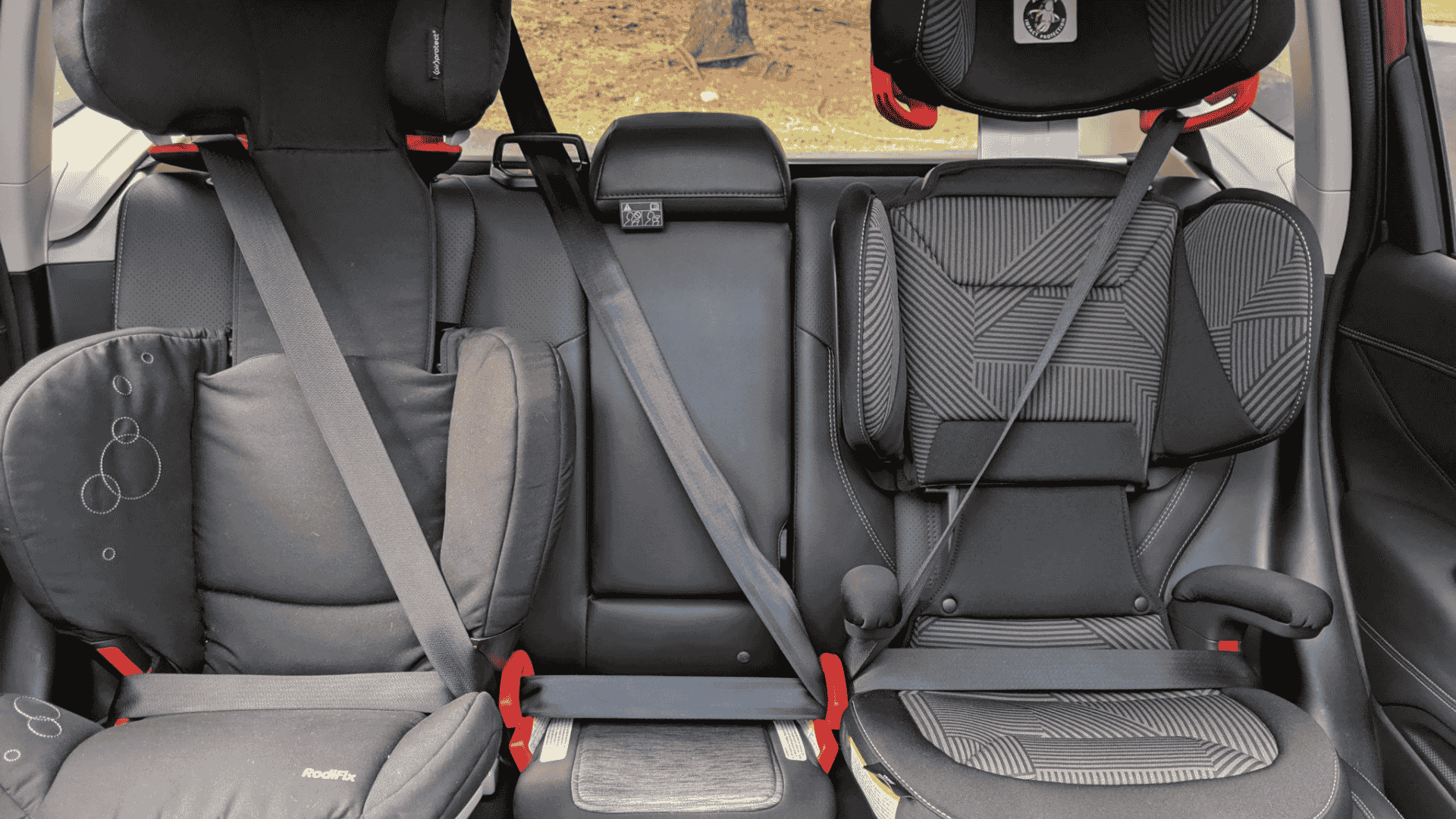
High-back booster seats offer built-in back and head support, which helps position the seat belt correctly and adds stability. Below are the main requirements parents should know.
1. Age Guidelines
Children usually move to a high-back booster seat between ages 4 and 7, after outgrowing a forward-facing car seat with a harness.
Safety experts recommend keeping children in booster seats until at least age 8.
High-back boosters are often better for younger booster-age children because they provide back and head support that backless boosters do not.
2. Height Requirements
Most high-back booster seats require a minimum height of about 38 to 44 inches to ensure proper seat belt placement.
Maximum height limits often range from 52 to 57 inches, depending on the seat design.
The shoulder belt should rest across the middle of the chest, not the neck. If the belt slips off the shoulder or sits too high, the child may still need a booster.
3. Weight Limits
High-back booster seats usually support children starting at 30 or 40 pounds, with maximum limits between 80 and 120 pounds.
These limits help ensure the seat belt routes correctly and the booster remains stable in a crash.
Using a booster below the minimum or above the maximum weight can reduce safety.
Safety Ratings for Car and Booster Seats
Safety ratings for car seats and booster seats play an important role in understanding backless booster seat requirements and overall child passenger safety.
These ratings are based on crash testing standards set by the National Highway Traffic Safety Administration (NHTSA).
All seats sold in the United States must meet Federal Motor Vehicle Safety Standard 213, which tests how seats perform in frontal crashes at controlled speeds.
These tests measure how well a seat protects a child’s head, chest, and body during impact.
Ratings also consider proper seat belt positioning and ease of correct use, since misuse can reduce safety.
NHTSA provides a 5-star ease-of-use rating system to help parents compare seats.
Safety Guidelines from Experts
Federal safety guidelines for car and booster seats are set by the National Highway Traffic Safety Administration (NHTSA) to protect child passengers in crashes.
NHTSA recommends that children use car seats and booster seats based on height, weight, and proper seat belt fit, not age alone.
These guidelines also shape backless booster seat requirements by stressing correct belt positioning.
Safety standards are reviewed and updated as new research becomes available and vehicle designs change.
While meeting federal rules is required, following expert guidelines often provides a higher level of protection for growing children.
Backless vs High-Back Booster Seats
Choosing between a backless and a high-back booster seat depends on your child’s size, behavior, and your vehicle’s design.
| Feature | Backless Booster Seat | High-Back Booster Seat |
|---|---|---|
| Head and back support | No built-in support | Built-in head and back support |
| Seat belt positioning | Uses a vehicle belt fit only | Guides the shoulder belt correctly |
| Vehicle headrest needed | Yes | Not required |
| Side-impact protection | Basic | Added side protection |
| Best use case | Older children who sit still | Younger booster-age children |
When a Child Is Ready to Transition Between Seats?
A child is ready to move to the next car or booster seat stage based on size, not just age.
Most children transition from a forward-facing car seat to a booster seat once they outgrow the harness system.
A child is ready for a booster when they can sit upright for the full ride without slouching or leaning.
The seat belt must rest flat across the upper thighs and the center of the shoulder.
Children usually stay in a booster seat until the vehicle’s seat belt fits correctly without help. This often happens when a child reaches about 4 feet 9 inches tall.
Safety experts agree that children should stay in each seat type as long as they fit the height and weight limits.
Therefore, before transitioning, ensure that the child has surpassed the high-back or backless booster seat requirements. Moving too soon can reduce protection during a crash.
Tips for Installation and Proper Use
Correct installation and daily use are just as important as choosing the right car or booster seat. Even a highly rated seat may not protect a child if it is used the wrong way.
- Avoid bulky clothing: Thick jackets can affect how the seat belt fits and reduce safety.
- Use the correct seating position: Place booster seats in the back seat, which is the safest spot for children.
- Confirm head support: Make sure the vehicle seat or headrest supports the child’s head and neck when using a backless booster.
- Secure the booster seat: Follow the manufacturer’s instructions to keep the booster stable when in use.
- Check the seat belt fit: The lap belt should sit low across the upper thighs, not the stomach, and the shoulder belt should rest across the chest and shoulder.
Conclusion
Understanding car and booster seat safety comes down to knowing the rules, the ratings, and how they work together.
This blog explained that federal standards set the minimum, and higher safety ratings support better decision-making.
It also covered high-back and backless booster seat requirements, key differences between them,
Make sure to notice the signs that show when a child is ready to move to the next seat. Even a well-rated seat must be used correctly to protect a child.
Before scrolling on, remember that the height and weight matter more than age.
If you have any personal experiences with car or booster seats, add them in the comments below to help others make informed safety choices.
Frequently Asked Questions
Can a Backless Booster Seat Be Used in the Front Seat of a Car?
Backless booster seats should be placed in the back seat whenever possible. The front seat increases injury risk, especially if the vehicle has active airbags.
Are Backless Booster Seats Allowed in Pickup Trucks?
They may be allowed if the rear seat has a proper shoulder belt and head support. Vehicle design plays a key role in meeting safety requirements.
Do Safety Standards Differ for Inflatable Booster Seats?
Yes, inflatable booster seats must meet the same federal standards as rigid boosters, but they may have stricter usage limits set by the manufacturer due to design differences.