
Driving an automatic car feels effortless; you shift to drive, press the pedal, and go.
But somewhere between that smooth start and the quiet ride, a question often pops up about what’s happening behind the scenes.
Many people assume clutches disappear the moment you choose an automatic, yet curiosity lingers in their minds, especially when comparing it to a manual car.
Do automatic cars have a clutch, or do automatics have clutches hidden out of sight? This thought usually arrives when you least expect it, during a test drive or while comparing cars online.
This blog unpacks those questions, and you’ll learn how different automatic transmissions manage power, why clutch pedals aren’t needed, and what this means for everyday driving.
Role of a Clutch in The Car
A clutch is a mechanical component that controls the smooth transfer of power from a car’s engine to its wheels.
Its main job is to temporarily disconnect the engine from the drivetrain, allowing the driver to change gears smoothly without stalling the engine or damaging the transmission.
When the clutch is engaged, engine power flows directly to the wheels. When it’s disengaged, that power flow is interrupted, giving the driver control over speed and gear selection.
In traditional manual transmissions, the clutch is essential because it allows precise control over gear shifts and vehicle movement.
Without a clutch, changing gears in a manual car would be rough, inefficient, and could cause serious mechanical wear.
Do Automatic Cars Have a Clutch?
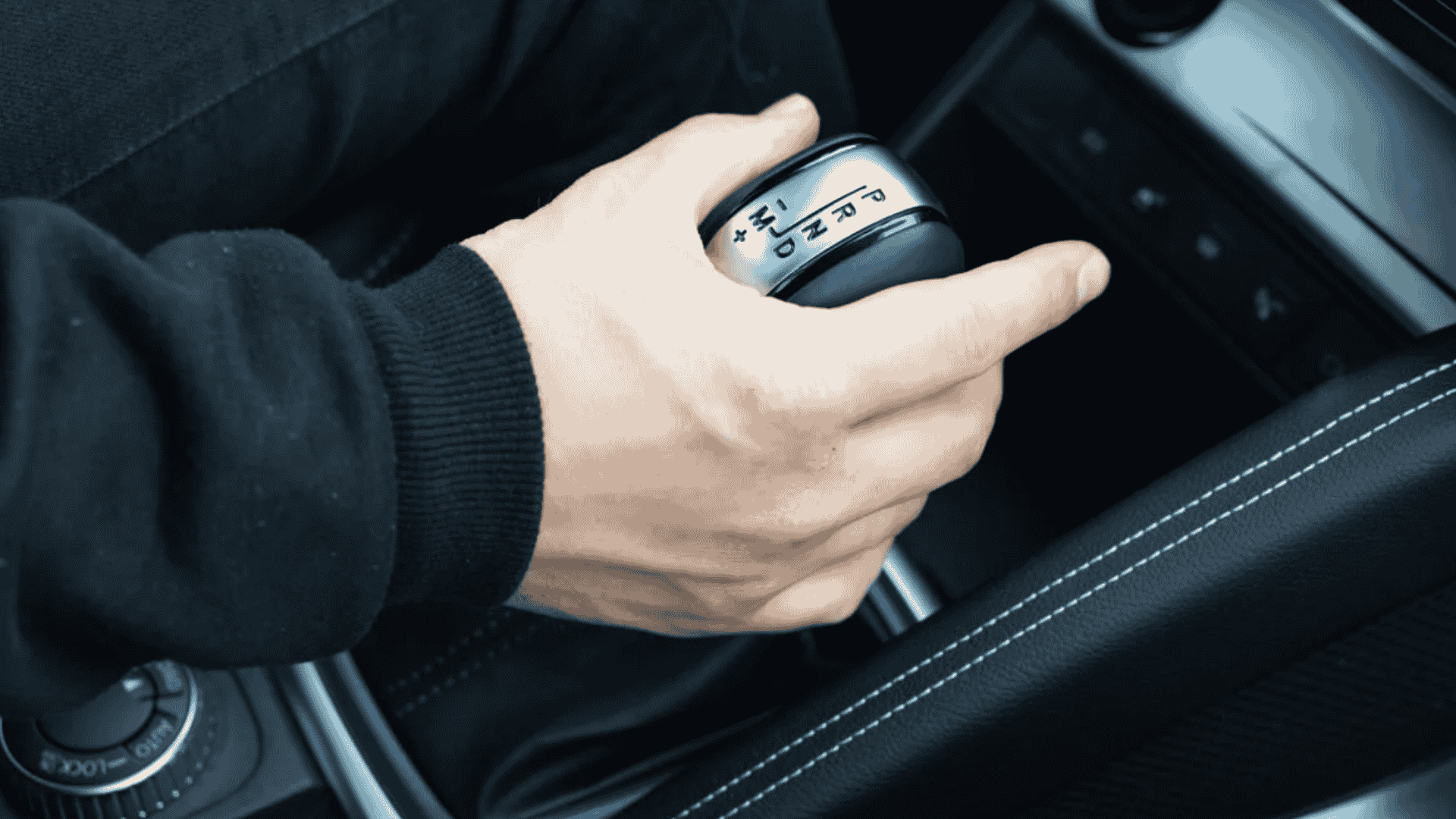
Automatic cars do have a clutch system, but the answer isn’t a simple yes or no.
It depends on the type of automatic transmission being used. Unlike manual cars, most automatic vehicles do not have a clutch pedal, but they do have an internal clutch.
Instead, advanced internal systems handle clutch engagement automatically during driving.
Traditional automatic cars use a torque converter and internal clutch packs to manage the transfer of power between the engine and the wheels without requiring driver involvement.
This automatic control allows the car to change gears smoothly on its own, adjusting to speed, engine load, and driving conditions without any manual input from the driver.
Clutches in Manual vs Automatic Cars
Manual cars rely on direct driver control, whereas automatic cars handle clutch operation internally using advanced systems. The goal is the same, but the way each system works differs.
| Feature | Manual Transmission | Automatic Transmission |
|---|---|---|
| Clutch Pedal | Present and operated by the driver | Not present; the system works automatically |
| Clutch Function | The driver manually controls the power transfer | Power transfer handled internally |
| Gear Shifting | Gears are changed manually by the driver | Gears shift automatically |
| Power Transfer Method | The mechanical clutch connects the engine to the wheels | Torque converter or internal clutch system |
| Driving Effort | Requires coordination and skill | Easier and more comfortable to drive |
How Automatic Transmissions Work without a Clutch Pedal?
Automatic transmissions work differently from manual systems, removing the need for a clutch pedal altogether. The key element is the torque converter, which handles engine power.
- Torque Converter: A fluid-based coupling that connects the engine to the transmission and manages power flow smoothly.
- Idle Operation: Allows the engine to keep running even when the vehicle is completely stopped.
- Hydraulic Power Transfer: Uses transmission fluid instead of direct mechanical contact to transfer engine power efficiently.
- Automatic Adjustment: Automatically adapts to changes in speed, load, and driving conditions in real time.
- No Manual Engagement: Eliminates the need for driver-controlled clutch operation during gear changes.
By replacing the manual clutch with a torque converter, automatic transmissions deliver seamless gear changes and easier driving. This system improves comfort, reduces driver effort.
Types of Automatic Transmissions and their Clutch Systems
Automatic cars are not all built the same; while they remove the need for a clutch pedal, different automatic transmissions use different methods to manage power and gear changes.
1. Traditional Automatic (Torque Converter)
A traditional automatic transmission uses a torque converter instead of a clutch pedal to transfer power from the engine to the wheels.
The torque converter uses transmission fluid to smoothly manage power, allowing the car to stop without stalling. Internal clutch packs engage and disengage automatically to change gears.
These clutch packs are controlled by hydraulic pressure and electronics, not the driver.
This setup makes driving smooth, reliable, and ideal for everyday use, especially in traffic-heavy conditions.
2. Automated Manual Transmission (AMT)
An automated manual transmission still uses a physical clutch, but there is no clutch pedal for the driver to operate manually.
Instead, sensors and electronic control units handle clutch engagement and gear changes automatically.
The system decides when to shift gears based on speed, engine load, and throttle input. Since AMT is based on manual transmission hardware, it is often more affordable and fuel-efficient.
However, gear changes can feel slower or less smooth compared to traditional automatics.
3. Dual-Clutch Transmission (DCT)
A dual-clutch transmission uses two separate clutches instead of one to deliver faster and smoother gear changes.
One clutch controls odd-numbered gears, while the other handles even-numbered gears.
This design allows the next gear to be ready before the shift happens. As a result, gear changes are quick and nearly seamless.
DCT systems are popular in performance and premium cars because they improve acceleration, driving response, and overall efficiency without sacrificing comfort.
4. Continuously Variable Transmission (CVT)
A continuously variable transmission does not use traditional gears or a standard clutch system.
Instead, it relies on a belt-and-pulley system to provide an endless range of gear ratios.
This allows the engine to stay at the most efficient speed while driving. Power is transferred smoothly without noticeable gear shifts.
CVTs are known for their fuel efficiency and smooth ride, making them common in compact cars and hybrids designed for comfortable, everyday driving.
Do You Need to Use a Clutch in Automatic Cars?
You do not need to use a clutch in automatic cars because there is no clutch pedal for the driver to operate in the car itself.
All clutch-related functions are handled internally by the transmission system, allowing the car to shift gears on its own.
Instead of worrying about clutch control, drivers should focus on using the brake and accelerator smoothly and selecting the correct driving mode, such as park, drive, or reverse.
This makes automatic cars easier to drive, especially for beginners and in stop-and-go traffic.
The clutch system exists but works automatically, removing the need for manual input and reducing driving stress.
Real Users Insights on Torque Converter
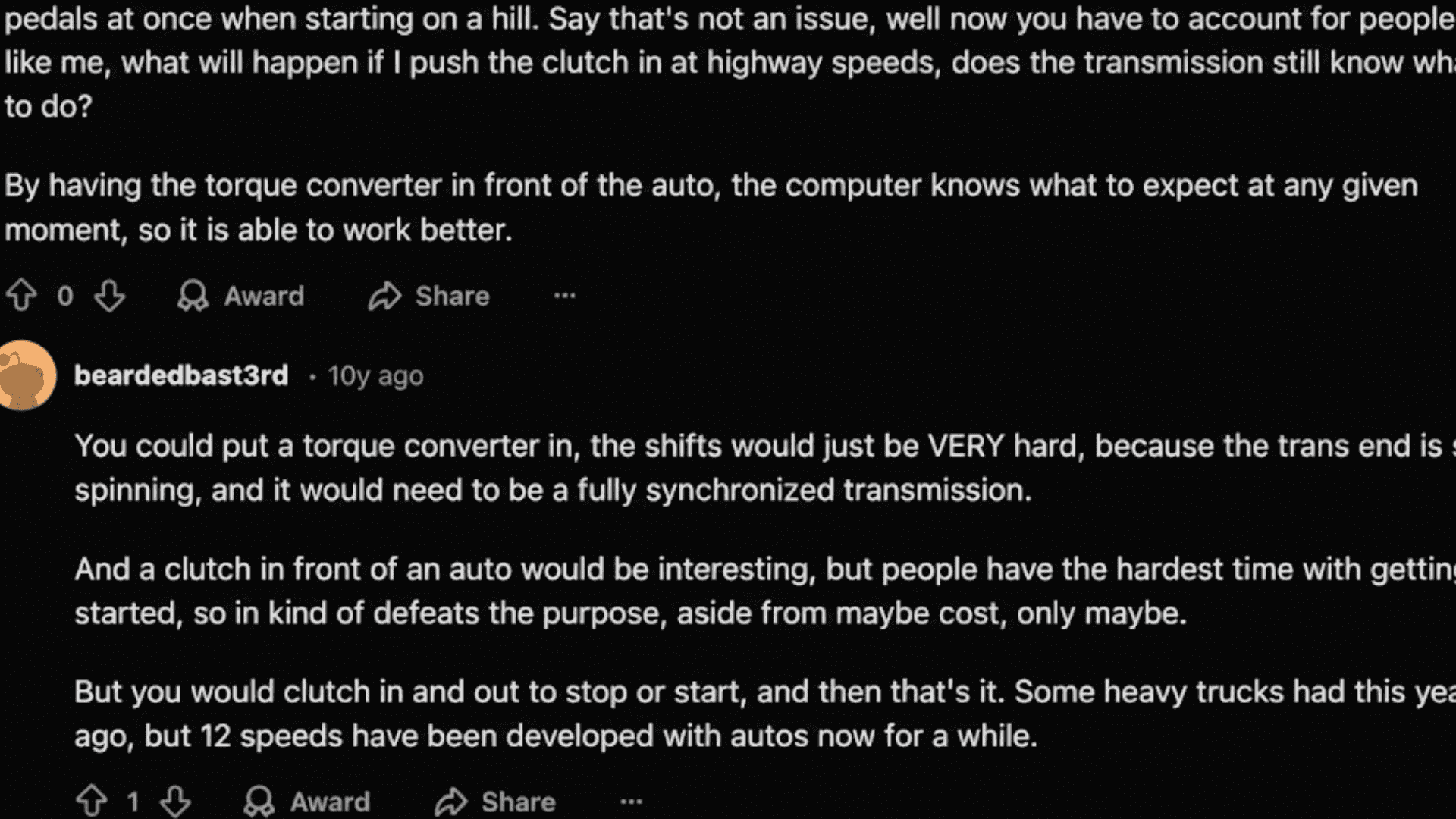
Reddit’s take is simple: a torque converter does act like a clutch, but it’s way gentler.
Instead of friction plates grabbing and releasing, it uses transmission fluid to “blend” power from the engine to the gearbox.
One commenter compared it to a bathtub on a seesaw; fluid movement has a natural delay, so nothing snaps instantly.
That smoothing is perfect for everyday driving: you can crawl in traffic or creep at parking-lot speeds without stalling, because the engine and wheels can spin at different speeds.
Torque converters also add a bonus: torque multiplication when there’s a big speed difference between the impeller and turbine, helping launches feel effortless.
Automated clutches exist now (DCTs), but converters still win for smoothness.
Do All Cars Have a Clutch?
Not all cars have a clutch pedal, but almost all vehicles use some type of clutch or engagement system to manage power between the engine and the wheels.
In manual cars, the clutch pedal allows the driver to control this connection directly.
In automatic vehicles, the clutch system works internally through components like torque converters, clutch packs, or electronically controlled clutches.
Modern innovations have also changed how clutches are used, especially in electric vehicles, which often do not need a traditional clutch because electric motors deliver power differently.
However, even these vehicles rely on advanced control systems to manage power smoothly.
While designs vary, some form of engagement mechanism is essential for safe, efficient, and controlled vehicle movement.
Common Myths About Clutches and Automatic Cars
Many drivers have misunderstandings about how clutches work in automatic vehicles. These myths often come from comparing automatics directly with manual cars.
- Automatic cars don’t have a clutch at all: Most automatics use internal clutches or torque converters to manage power automatically.
- No clutch means no mechanical complexity: Automatic transmissions are highly complex systems with advanced internal components and precise electronic controls.
- Manual cars always give better control: Modern automatics can offer precise control using electronic systems and smart gear mapping.
- Automatics are less durable than manuals: Properly maintained automatic transmissions can be just as reliable.
- Learning automatics requires no skill: Drivers still need awareness, braking control, and proper gear selection for safe driving.
Which Transmission Type Is Right for You?
Choosing the right transmission depends on how and where you drive, as well as your personal preferences.
Drivers with strong manual skills may enjoy the control of a manual gearbox, while beginners often prefer automatics for simplicity.
Budget also plays a role, as manual cars are usually more affordable upfront, while automatics may cost more but offer greater convenience.
Urban driving favors smooth, easy gear changes, and that is automatic transmission, whereas highway driving can suit both types.
If you value quick acceleration and sporty performance, options like dual-clutch systems stand out. For comfort and relaxed driving, traditional automatics and CVTs are ideal.
Conclusion
Understanding how clutches work helps clear up common confusion about modern vehicles.
When asking do automatic cars have a clutch, the simple answer is yes, but the system works differently than in manual cars.
While automatics do not have a clutch pedal, they rely on internal clutches, torque converters.
So, if you’ve wondered about: do automatics have clutches or do all cars have a clutch, the takeaway is that nearly every vehicle uses some form of engagement mechanism, even if it’s not visible.
Knowing these differences can help you make car-buying decisions based on comfort, performance, and driving needs.
Have thoughts or questions about transmissions? Share your experience in the comments; we’d love to hear from you.